
Intensive practice of Vajrasattva
Next session: summer 2027

Presentation of the retreat
This year, Geshe Loden will guide us in the practice of Vajrasattva purification and will notably give the transmission of the Vajrasattva mantra.
One of the fundamental characteristics of karma is that it grows over time, like a seed capable of producing a large quantity of fruit. To prevent the increase of negative imprints in our mind, it is necessary to purify them. This is the entire purpose of the Vajrasattva practice. The recitation of its hundred-syllable mantra, combined with the application of the four opponent powers, allows for the elimination of negative karmas accumulated through body, speech, and mind, and the restoration of broken vows and samayas.
This intensive practice is open to all, but it is preferable to have received the Vajrasattva initiation and to be able to perform the four daily sessions.
The teacher
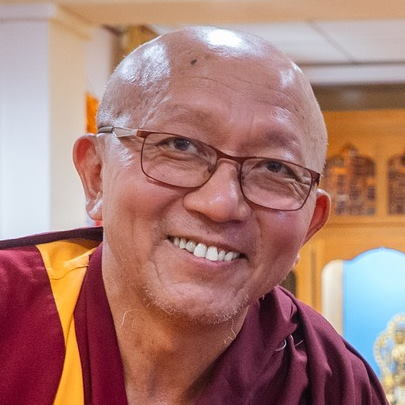
Geshe Loden is our resident master at the Institute. He was born in Bylakuppe, South India, in 1961. He entered Sera Je Monastery at the age of 9 and continued his studies until he obtained the title of Geshe in 1994. He then spent over six years in strict retreat.
From 2003 to 2006, he held the position of chant master (umze) at Sera Je Monastery, which he agreed to leave at the end of 2007 to succeed Geshe Tenzin Dorje as the principal teacher of Vajra Yogini Institute.
Conditions
- Languages: Tibetan, French, English
- Registration and advance payment are mandatory
- Registration is only open for full retreat participation. Subject to remaining availability, partial participation will be possible from June 1.
Schedule
- First day:
- 5 PM latest arrival time
- 7 PM meal
- 20h session d’introduction (disponible sur zoom)
- Following days:
- 7:00 AM – 8:30 AM practice session (available on Zoom)
- 10:30 AM – 12:00 PM practice and teachings (available on Zoom)
- 4:30 PM – 6:00 PM practice session (unguided, self-directed)
- 8:00 PM – 9:30 PM practice session (available on Zoom)
- Last day:
- 7:00 AM – 8:30 AM practice session (available on Zoom)
- 10:30 AM – 12:00 PM practice and teachings (available on Zoom)
The location
The retreat will be hosted by Institut Vajra Yogini, a Buddhist center located in a magnificent 19th century chateau in the French country-side near Toulouse.

